
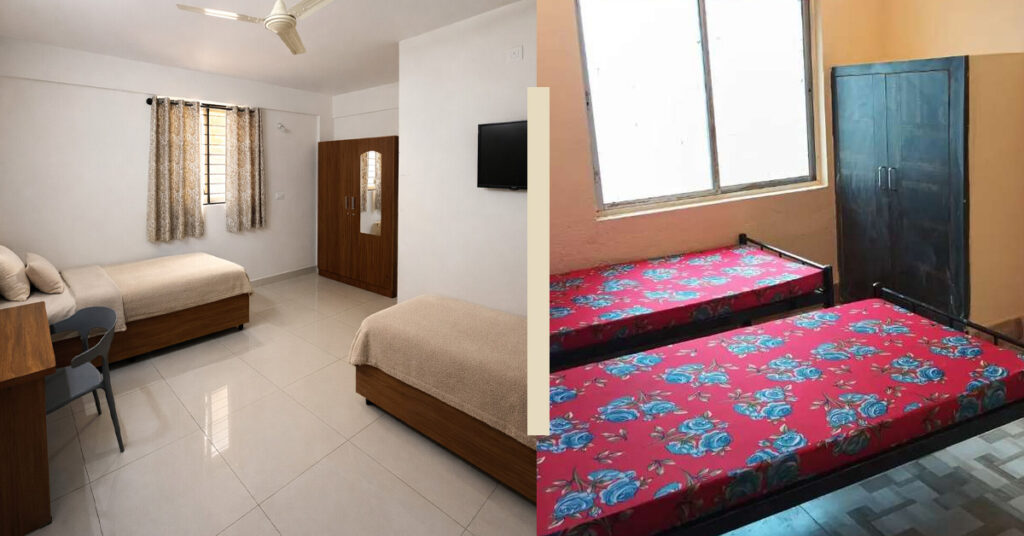
For decades, the word hostel has evoked a very distinct set of images in the minds of Indian students and their parents: dimly lit halls, creaking iron cots, suspect hygiene standards, and a stern warden who treated 20-year-olds as though they were kindergartners. It was a coming-of-age, a punishment in the name of an education.
But the world has changed. This new wave of student housing is upending the market, offering a lifestyle that mingles the brotherhood of a dorm with the luxury of a budget hotel and the tech-savvy of a co-working space. But is the hype real? Which is better for students, smart hostels or traditional hostels?
In this comprehensive guide, we’ll explain each aspect of both lifestyles, from safety to social life, so that you can make the best decision for your college years.
What is the Difference Between Smart Hostels and Traditional Hostels?
To understand which is better, we first need to define what we are comparing.
The Traditional Hostel
Think of the classic hotel model. These are typically operated by independent landlords or by older educational trusts. The roof is all they care about. The management style is generally manual, imagine paper registers for entry and exit, and the furnishings are very minimal: a bed, some kind of wardrobe, and shared bathrooms. The philosophy here is survival.
The Smart Hostel
On the other hand, a smart hostel environment is a professionally managed community. Smart Hostels such as Serenity Hostels have reinvented student life by incorporating tech innovation and hospitality in everyday living. Management is tech-enabled through apps, security is in large part biometric, and the amenities are meant to cater to the holistic health of a modern student, mental, physical, and academic. Whereas a traditional hostel will provide you with a place to lay your head, a smart hostel provides you with a stay that actually feels like an upgrade to your lifestyle. It’s a middle path between the regimented order of campus dormitories and the haphazard freedom of renting your own private flat.
Which Is Better for Students: Smart Hostels or Traditional Hostels?
The answer varies based primarily on your preferences, but amidst students, smart hostels are winning hands-down. Let’s understand why smart hostels are becoming the default choice for students at educational hubs like Bangalore.
In a typical best PG in Bangalore or rented house, you’re on your own for utilities. When the Wi-Fi is out, you hound the landlord. If the geyser does not work, you have to wait for a plumber for days. This friction slowly chews away at your study time and the little peace you have left.
Smart hostels eliminate this friction. They function more as high-quality, tech-savvy budget accommodation minus that soulless hotel feel. How about filing a maintenance complaint on an app and having it fixed hours later, or checking the night’s dinner menu on your phone before you even head out of class? For students, it is all about convenience and choice because smart hostels like Serenity Hostels professionalise the living experience and free you up to concentrate only on your grades and your growth at an affordable price.
What Facilities Do Smart Hostels Offer Compared to Traditional Hostels?
This is where the disparity becomes glaring. Traditional hostels usually max out at offering three meals a day and a security guard. Smart hostels, however, offer something more than accommodation; they offer an infrastructure for success. Here is a breakdown of the facilities you can expect in a smart setup versus a traditional one:
- High-Speed, Redundant Connectivity
In a typical hostel life setting, Wi-Fi is often an amenity or an overburdened shared connection that goes down when the whole lot logs on at night. In a smart hostel, high-speed internet connectivity with standby lines is no longer an added utility but just standard.
- Tech-Enabled Convenience
In traditional hostels, everything is kept on notice boards, or you are told in person. Smart hostels use proprietary apps. You use an app to pay your rent, request room cleaning, check in attendance, and even order extra snacks. This layer of virtuality cuts out what can be the face-to-face awkwardness of old school, traditional PGs.
- Lifestyle Amenities
Classic hostels may have had a dingy TV room, but smart hostels now offer gaming zones, mini-theaters, and fully equipped gyms. They know that hostel life isn’t about sleep and study, it’s also about unwinding after long lectures. A treadmill or a PlayStation in your building spares you the expense and travel time of membership at outside gyms and clubs.
- Study and Co-working Spaces
At regular hostels, you’re supposed to study on your bed or a cramped desk in a crowded room full of mush-minded people. Smart hostels have specific quiet working areas, quiet zones for quiet brains, or even co-working style lounges, where ergonomic seats and charging ports are on hand for all-nighters and group work without disturbance from your roomies.
Is Serenity Hostels Safer Than Traditional Hostels for Students?
Number one on the minds of parents is safety, and this is where smart hostels really pull ahead versus their old-school rivals. That is in no small part because traditional hostels depend on visual security, one often solitary security guard at the gate, and a manual register for check-in and checkout. This is a deterrent, but it is too reliant on humans. Guardians can fall asleep, and the register can be fudged. Smart hostels use systemic security where there is more than one layer of defence.
- Biometric Control: With a fingerprint or facial scanner only, residents are allowed to enter the premises. And there are no physical keys to lose or duplicate.
- 24/7 Digital Security: HD CCTV surveillance is available throughout the reception, corridors, and doors, which are centrally monitored for the clearing process.
- Digital Attendance: An active attendance system process tracks student check-in and out times to maintain campus safety while not requiring phone calls home. Keep every minute of the hike within view for parents.
Living in the big city, it is great to know that home is a fortress; old school apartment protection systems do not even compare.
Are Smart Hostels More Expensive Than Traditional Hostels?
There is a general perception that smart hostels come with a heavy price tag. But when you do the math in terms of a value proposition, it is quickly seen that relatively frequently, Smart Hostel comes out on top. On paper, a traditional hostel would offer you less in terms of rent per month. Yet this fee is frequently misleading. It generally includes only a room and simple meals. You end up paying extra for a lot of things.
- High-speed data, as the wifi won’t be working consistently.
- Gym memberships.
- Laundromats, if laundry isn’t included.
- Going out for meals, such as the hostel food, can sometimes be unhygienic or bland.
- Finding good study spots, like libraries or cafes, can be challenging and cost more.
When you factor in those hidden costs, a traditional hostel isn’t really any cheaper than, often it’s more expensive than, a smart hostel.
Serenity Hostels are all-inclusive. The price you pay covers the gym, the high-speed Wi-Fi, the laundry service, and often substantially better food menus devised by nutritionists. Additionally, smart hostels are not akin to booking rooms in hotels randomly for extended periods of time, leaving a gap in your wallet with nothing or no one left to interact with. Smart hostels are all the shine of a hotel room at that student-friendly price point, amortised over an academic year.
The Community Aspect: Isolation vs. Networking
Loneliness is possibly the greatest hidden downside of traditional hostels or renting flats in an unknown city. Many traditional hostels strictly divide students, with few welcoming common areas for students to gather outside of their rooms.
Serenity Hostels are built to be social facilitators. The common spaces, the cafeterias, and the gaming areas are designed to make you meet people. In a city like Bangalore, who you know is the amount of money you are worth. When living at Serenity Hostels, you’re probably sitting among future entrepreneurs, artistes, and tech wizards in the common lounge. The management often arranges for community events, movie nights, and festival celebrations to ensure that no student ever feels left out and homesick.
The Verdict
Comparing smart hostels vs regular hostels: what is good for students? If you are weighing the pros and cons of having a smart hostel or a traditional student hostel, the future trend in education makes this very clear.
Traditional Hostels
There was a place in the world for the traditional hostel; however, all students required was a desk and a lamp. But today’s students need connectivity, safety, and a sense of balance in order to succeed in an academically pressure-filled environment.
Serenity Hostels
Smart hostels like Serenity Hostels are not just letting beds; they are creating the perfect environment to succeed. They promise the freedom of adulthood with the safety net of trained management. They combine the services of budget hotels with the intimacy of a community. So, if you are searching for a home that respects your safety concerns, recognizes your dependence on technology, and encourages student achievements with state-of-the-art facilities, smart hostels are not only a good option; they’re the only option for the student of tomorrow.
Selecting the Foundation for Your Future
One of the biggest decisions that you’ll make as a student at university is where to live. Even if a basic hostel seems like all one needs to survive, it has hidden expenses, both in terms of your wallet and your mental health. Smart hostels such as Serenity Hostels are a new evolution in student living. With modern security, zero-configuration technology, and a vibrant community space, this is more than just a nice place to stay: it’s a community of people who truly care for each other. If you wish to think back on your college years that were spent growing and networking, or just for peace of mind, rather than filing maintenance complaints and dealing with spotty Wi-Fi, the move is obvious. Not just a place to stay, but a place to belong.
FAQs
What is the difference between smart hostels and traditional hostels?
Old hostels are just a bed and a mud hut, whereas the new-generation hostels are luxury tech-enabled living with professional hospitality alongside community-based amenities.
Which is better for students, smart hostels or traditional hostels?
Smart hostels are much better for contemporary students as they take away daily frictions and a student can just concentrate 100% on their academic and professional growth.
Are smart hostels more expensive than traditional hostels?
You might be paying more in base rent, but smart hostels tend to work out cheaper when you take into account all-inclusive utilities, gym access, and quality food.
What facilities do smart hostels offer compared to traditional hostels?
Smart hostels get you covered with facilities like high-speed dual redundant Wi-Fi, app-based maintenance tracking, cool gaming zones, and ergonomic co-working spaces, which are missing in old school hostels.
Are smart hostels safer than traditional hostels for students?
Smart hostels are also way safer with multi-layered digital security, biometric access, and 24-hour central monitoring through HD CCTV.